
Wolmanized wood on the Gulf Coast: How to spec pilings that last decades in saltwater

On the Gulf Coast, Wolmanized wood means one thing: pressure-treated wood tough enough for saltwater. Wolmanized wood is not a species or a grade, it is a brand of pressure-treated wood, and the term is synonymous with treated wood. When a Texas or Louisiana contractor asks for it, they are asking for treated piling, timber, and lumber that will survive immersion, marine borers, and storm surge. The name stuck because Wolman® was the original name in pressure treating, so people use it the way they say Kleenex for tissue.
The catch is that here the stakes are higher than almost anywhere else in the country. The Gulf Coast sits in the most demanding marine exposure zone the industry recognizes, so “just get me some Wolmanized wood” is not a spec. Below is what the term actually means, what changed in 2003, and how we help builders in Texas and Louisiana order the right treated wood for saltwater the first time.
Key takeaways
- Wolmanized wood is shorthand, not a material. On the Gulf Coast, the term means saltwater-rated pressure-treated wood, not a separate product.
- The Gulf Coast is the highest marine hazard zone. It falls in the toughest marine classification in the continental US, so treatment and retention matter more here than inland.
- The rules changed in 2003. The original Wolmanized wood used CCA; residential use moved to copper azole, while CCA continues for marine, foundation, and industrial work.
- Asking for Wolmanized wood by name? We can supply it. The saltwater-rated treated piling and timber we provide is exactly what the term refers to, and we can source the Wolman brand when a project calls for it.
- Spec by exposure and retention, not brand. For a coastal job, specify the exposure zone and AWPA retention rather than a trademark.
What Wolmanized wood means for Gulf Coast builders
Wolmanized wood is pressure-treated wood sold under the Wolman® brand. The wood, southern pine piling, timbers, and lumber, is placed in a pressure cylinder and forced full of a waterborne preservative that protects it against fungal decay and termite attack. For decades that preservative was chromated copper arsenate, or CCA.
Here is what matters for a coastal contractor: the brand name tells you almost nothing about whether the wood will hold up in saltwater. Two boards can both be “Wolmanized” and carry very different levels of protection. What actually determines saltwater performance is the preservative retention, the amount of preservative locked into the wood, which is set by the American Wood Protection Association (AWPA) use category system. On the Texas and Louisiana coast, that number needs to be high.
Why the Gulf Coast changes the spec
The Gulf Coast is not average marine exposure. Under the AWPA use category system, saltwater immersion along the Gulf falls into the highest marine hazard classification in the continental United States, driven by warm water, aggressive marine borers, and long exposure seasons. Warm Gulf water lets wood-destroying organisms stay active nearly year round, which is exactly why treated wood that would be fine for a freshwater pond up north can fail early in a Galveston or Lake Charles slip.
That single fact reshapes how you should think about ordering treated wood here:
- Retention has to match saltwater immersion, not ground contact. A piling rated for a fence post is not rated for a dock. The higher the exposure, the higher the retention the wood needs.
- Marine borers are the real enemy. Teredo and other borers attack submerged wood along the Gulf aggressively. The right treatment and retention are what keep them out.
- Storm surge and cyclic wetting add stress. Gulf structures see hurricane loading and repeated wet-dry cycling that inland structures never face, so under-treated wood shows its weakness fast.
This is the honest reason we push back when someone just wants “Wolmanized wood” for a coastal job. On the Gulf Coast, the exposure zone drives the whole order, and getting it wrong builds in a replacement cycle nobody budgeted for.
Where the Wolman name came from
The name traces to Dr. Karl Heinrich Wolman, a German wood preservation pioneer. By the company’s own account, the firm he founded was established in 1911, and over the following decades Wolman® grew into the best-known name in pressure treating. That is how a brand quietly becomes an everyday word. Enough people asked for it by name that the name came to mean the whole product.
In North America, the Wolmanized® brand has changed corporate hands several times and today is managed by Arch Wood Protection under Arxada. None of that changes the point for a builder: the brand is the label, and the standard is what protects the wood.
What changed in 2003, and why it still matters for marine work
The original Wolmanized wood was treated with CCA. The arsenic in CCA is present as arsenate, the pentavalent form that occurs naturally in soil, water, and plants, not the elemental arsenic people often picture. Over concerns about arsenate levels in backyard settings, manufacturers reached a voluntary agreement with the EPA to move residential uses onto newer preservatives. As the U.S. Environmental Protection Agency documents, that voluntary cancellation of virtually all residential CCA uses took effect December 31, 2003. It was a voluntary transition, not an outright ban.
For Gulf Coast marine work, the practical takeaway is simple:
- Residential Wolmanized wood moved to copper azole, a preservative with no arsenate. That is what you find at the lumberyard for decks and fences today.
- CCA did not disappear. The EPA classifies chromated arsenicals as restricted-use products, applied only by certified applicators, and they remain approved for marine, foundation, agricultural, and industrial uses. That includes a lot of residential work on the Gulf Coast: the CCA-treated foundation piling under elevated beach homes is one of the largest niches we serve. For saltwater piling and heavy coastal structures, CCA-treated southern pine is still specified, still standardized, and often still the right call.
On safety, it helps to be precise. The EPA found cancer and non-cancer risks of concern for workers at treatment plants, which is why CCA is a certified-applicator product, but it did not find health risks of concern for the general public from treated wood in service. CCA is also going through the EPA’s routine registration review, with a product label amendment accepted as recently as August 2025 to tighten worker protections. The approved marine and foundation products remain available, and as long as there is treated wood there will be CCA-treated wood for these applications.
What to order for a Gulf Coast job, by exposure
| Application | Typical exposure | What to specify |
|---|---|---|
| Deck, fence, above-ground framing | Above ground / ground contact | Copper azole (residential Wolmanized-type), retention matched to ground contact |
| Freshwater dock or bulkhead | Fresh water | Treated southern pine at fresh-water retention |
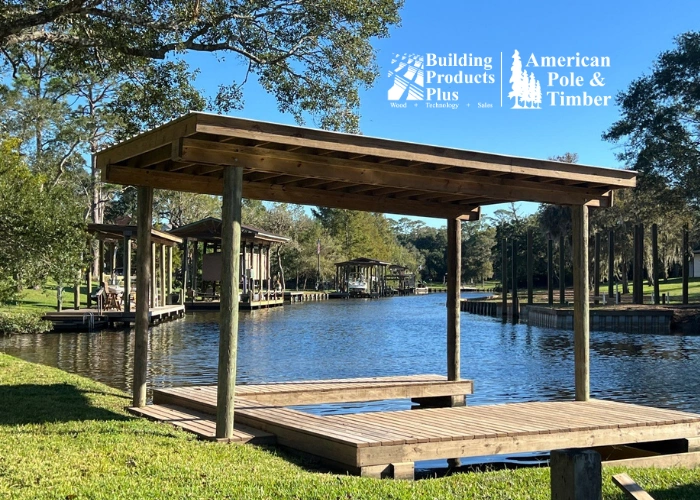
| Saltwater dock, pier, boat slip | Saltwater immersion (highest Gulf hazard) | Marine-grade CCA-treated piling at saltwater retention |
| Foundation piling | Ground contact / structural | Foundation-grade treated piling to code and AWPA retention |
Do we carry Wolmanized wood
Yes. Since Wolmanized wood is pressure-treated wood, the saltwater-rated piling, timber, and lumber we supply, from our Houston yard and across the Gulf Coast, is exactly the category the term refers to, treated to the AWPA retention your application calls for. If a project specifically calls for the Wolman® brand name, we can source that too. Ask us for Wolmanized wood and we know exactly what you mean, and we will get you the correctly treated product for coastal duty.
That is the consultative way we work. We ask what the wood is for and where it lives, saltwater immersion, brackish water, ground contact, or above-ground framing, and match the species, treatment, and retention to it. You can review our marine and shoreline materials or just call and describe the job. Serving Texas, Louisiana, and the wider Gulf Coast, our team specs coastal treated wood every day.
How to spec treated wood for saltwater
Because “Wolmanized” no longer tells a supplier which chemistry or retention you need, the useful thing to specify is the exposure and the standard. Four questions get a Gulf Coast order right:
- What is the water? Saltwater, brackish, or fresh. On the Gulf, saltwater immersion sits at the top of the hazard scale and drives everything else.
- What retention does the exposure require? AWPA sets retention by use category, and saltwater immersion demands the highest marine retention. Do not let a lower grade get substituted in.
- What preservative fits? CCA-treated southern pine for restricted marine and foundation use, copper azole for above-ground and residential work.
- Is it structural piling? Marine and foundation piling are graded and treated differently than dimensional lumber. Our treated marine piling is built for exactly that duty.
Get those four right and the brand on the label stops mattering. That is the whole point. On the Gulf Coast especially, a good spec is written around exposure zone, retention, and standard, not a trademark. Call our Gulf Coast team at (713) 434-8008 and tell us what you are building.
Frequently asked questions
Is Wolmanized wood good for saltwater docks on the Gulf Coast?
It depends entirely on the retention, not the brand. Saltwater immersion on the Gulf Coast is the highest marine hazard zone in the continental US, so you need treated piling at marine retention, typically CCA-treated southern pine. Residential-grade treated wood is not rated for saltwater immersion.
Is Wolmanized wood the same as pressure-treated wood?
Yes. Wolmanized wood is a brand of pressure-treated wood under the Wolman® name, and the terms are synonymous. When a Gulf Coast contractor asks for it, they mean saltwater-rated pressure-treated wood.
Can I still get CCA-treated piling for a marine job?
Yes. CCA is EPA-approved for marine, foundation, agricultural, and industrial uses as a restricted-use product applied by certified treaters. It is a strong, standardized choice for Gulf Coast saltwater piling and remains widely specified.
Why does the Gulf Coast need higher treatment than other regions?
Warm Gulf water keeps marine borers active nearly year round, and coastal structures face storm surge and constant wet-dry cycling. That combination puts Gulf saltwater immersion in the highest marine hazard category, so the wood needs higher retention to last.
If I ask you for Wolmanized wood, what will you actually send?
We will ask a few quick questions about the water, the structure, and the load, then supply treated piling, timber, or lumber at the correct AWPA retention for that exposure. On the Gulf Coast that usually means marine-grade treated piling for anything in saltwater.
Sources and references
- American Wood Protection Association (AWPA), use category system and marine retention standards: awpa.com
- U.S. Environmental Protection Agency, Overview of Wood Preservative Chemicals, including the voluntary cancellation of residential CCA uses effective December 31, 2003: epa.gov
- U.S. Environmental Protection Agency, Chromated Arsenicals (CCA) registration review: epa.gov/chromated-arsenicals-cca
- Wolman (BASF / Sika), official company history confirming the 1911 founding: wolman.de